
Summary: Agnes Strickland’s Candava; or, The Last Suttee (1849) is a short but revealing example of Victorian fiction shaped by debates over British rule in India, Christian reform, and the practice of sati. This edition places Strickland’s tale within a longer literary and political history, from late eighteenth-century Orientalist fascination with Indian customs to the more interventionist attitudes associated with figures such as Thomas Babington Macaulay and Governor-General William Bentinck. Earlier writers could portray sati as an heroic, if troubling, act of female devotion; by the early nineteenth century, evangelical and reformist opinion increasingly represented it as barbarous and incompatible with civilized government. Strickland’s melodrama reflects this shift. Her heroine, Candava, is presented as a reluctant victim of religious and social coercion, while British authority appears as the force capable of rescuing her from death. The tale culminates in a spectacular intervention by Company soldiers and Candava’s subsequent conversion to Christianity. Although deeply marked by Orientalist and imperial assumptions, the story also complicates simplistic moral binaries by centring a woman whose life is saved through intervention. The edition reproduces the 1849 text semi-diplomatically and situates it within the history of sati, empire, print culture, and reform in nineteenth-century British India itself.
Introduction: The Historical Context of Sati / Suttee
In the first Robin Hood novel, Robert Southey’s ‘Harold; or, The Castle of Morford’ (1791), we are told of a Norwegian woman’s travels through the Orient; entranced with the ways of the East, she marries an Indian man. Yet the romance does not last long; her lover dies and according to the custom amongst the gentoos, she must undergo sati, or suttee, and be burnt alive on her dead husband’s funeral pyre:
It is a custom among the Gentoos for a widow to burn herself upon the funeral pile of her husband. Yarian, a beautiful female with whom we were acquainted, was in this predicament. At this period a caravan happened to be setting forwards for China and Sir Guelphinor and myself resolved to go with it and then travel through the wide regions of Siberia. It was a long and dangerous route, but the only possible means of returning to our native countries. The Norwegian had before the death of her husband, sincerely though secretly loved Yarina. He had by this time acquired some knowledge of the language and resolved to attempt persuading Yarina to accompany us in disguise. The love of life joined to the affection she entertained for Guelphinor prevailed over the desire of glory. She disguised herself in a suit of her deceased husband and accompanied us. The Norwegian was happy and I partook of his happiness. The dangers we had participated in had been the means of establishing a firm friendship between us and I longed for the time when I should see him and Yarina settled safely in Europe.[1]
To understand why Robert Southey, a 16 year old in 1791, would have concerned himself with an Indian funeral rite, we must look back at the long and interconnected history that Britain and India share.[2]
The Rise of the Company Raj
Queen Elizabeth I was by no means an imperialist monarch, but her one major contribution to the rise of the British Empire was the granting of a Royal Charter to the Governor and Company of Merchants of London trading with the East Indies (hereafter named the East India Company), which gave this corporation a monopoly over trade with countries in the East. Gradually, the power and influence of this trading corporation grew, both in England and India.
During the eighteenth and nineteenth centuries, the British East India Company established a number of fortified trading settlements—“factories”—in various parts of the Indian subcontinent. The trading company boasted its own army and as it sought to increase its influence over Indian rulers and secure ever more favourable trading terms, it regularly got involved in territorial disputes between local Indian princely states, as well as against the French East India Company. When the first “World War” broke out in 1756—the Seven Years’ War, between the Kingdom of France and Great Britain and their respective allies—the British East India Company found itself fighting against the French Company and the Nawab of Bengal’s army.

Had the French and the Nawab of Bengal succeeded in expelling the British company from the subcontinent forever, then the history of Britain in India might be consigned to a mere footnote in history. But the British won: as a result of its victory against the Nawab of Bengal and French East India Company at the Battle of Plassey in 1757, the British East India Company annexed the region of Bengal. A vast part of the subcontinent was now under the control of a trading company, and Company rule was confirmed when the Treaty of Allahabad was signed in 1765, when the Mughal Emperor granted the British company the diwani of Bengal—the power to levy taxes on the inhabitants. From this point onwards, the Company expanded and consolidated its power not only over the territories it annexed, but also over the numerous princely states. By the nineteenth century it was clear that the British were there to stay. The Company, which had originally started out as a trading endeavour, had become a political power.

In the early days of the Company Raj, British administrators still knew that they were there to make money. They wanted to interfere as little as possible with Indians’ existing laws and customs; in short, Indian culture should be respected. And many British administrators very much admired Indian culture. The Governor of the Presidency of Fort St William and Head of the Supreme Council of Bengal, Warren Hastings, once declared: “I love India a little more than my own country.”
Hastings sponsored the first English translation of the Bhagavad Gita, the Hindu holy book, and founded the Asiatick Society in 1784. Other men such as James Achilles Kirkpatrick (1764–1805) “went native” by converting to Islam, learning Urdu, and even married Khair-un-Nissa, the daughter of a local Indian ruler. At this time, in high culture, we find that there was briefly a fusion of Indian and British styles of painting, practiced by Indian artists, known as ‘Company Style’, blending the European picturesque with simpler Indian watercolours.

In popular literature, novelists such as Phebe Gibbs in Hartly House, Calcutta (1789) were wholly admiring of the Indian way of life. Which brings us to one particular Indian custom which Gibbs drew attention to in her novel: the practice of sati, or suttee.
Sati was practiced in wealthier, usually aristocratic, Indian families when the head of the household passed away. Gibbs’s protagonist, Sophia Goldborne, is a committed and enthusiastic orientalist and describes the practice in the following manner:
There are other casts or classes, as you may have read in the European newspapers, that burn the bodies of their departed friends and relatives, and preserve their ashes with great piety. And of this number are those wives, who, with a degree of heroism, that, if properly directed, would do honour to the female world, make an affectionate voluntary sacrifice of themselves upon the funeral pile of their late departed husbands:—it is true that there have been instances of their shewing reluctance—but those instances seldom occur.[3]
According to Sophia Goldborne, a widow who underwent this process could give no further sign of her devotion to her husband than ‘sanctifying’ herself on the husband’s funeral pyre.

The Reformers Arrive
Hastings and Gibbs were of the ‘old guard’ mindset: they were entranced by India, this ancient civilization with whom they found themselves in contact (Gibbs’s novel was based on letters from her brother who served in the Company army). Yet waiting in the wings back in England was a new breed of civil servant: fervently Christian, and confident in their belief that England represented civilization and Indians were ‘backward’, they wanted to Christianize and Anglicize India, and remould the subcontinent in England’s image. Their attitude is best summed up in comments made by Thomas Babington Macaulay (1800–59):
We must at present do our best to form a class who may be interpreters between us and the millions whom we govern; a class of persons, Indian in blood and colour, but English in taste, in opinions, in morals, and in intellect.[4]
The age of the ‘do-gooders’ had arrived: evangelical reformers, although ignoring social problems, poverty, and calls for political reform at home in Britain, seized on the practice of sati as the target of one of their many empire-wide moral crusades. One man of this mould, William Bentinck, was appointed as the Governor General of India in 1828 and he was determined to stamp it out:
To consent to the consignment, year after year, of hundreds of innocent victims to a cruel and untimely end, when the power exists of preventing it, is a predicament which no conscience can contemplate without horror … Every day’s delay adds a victim to the dreadful list, which might perhaps have been prevented by a more early submission of the present question.[5]
That was certainly a dramatic way of seeing the problem. The truth is that sati was not widespread by the time Bentinck was appointed, but his campaign against it was part of the grander ‘civilizing mission’.

It is amazing how quickly Bentinck’s likeminded Christian propagandists swung into action behind this cause and voiced their concerns in popular literature. Where Phebe Gibbs admired the custom in the late eighteenth century, in the early Victorian period, Agnes Strickland left her readers under no illusions—the practice was barbarous and so, by extension, was the Hindu religion and the Indians themselves. Paradoxically, although the practice was conducted by very few people in India, as the moral crusade against sati gathered momentum in both the Indian and British press, there was a brief resurgence of it in Bengal. It was almost as though, resenting the ever-increasing interference of British legislators into their lives, Indian people were pushing back against it.
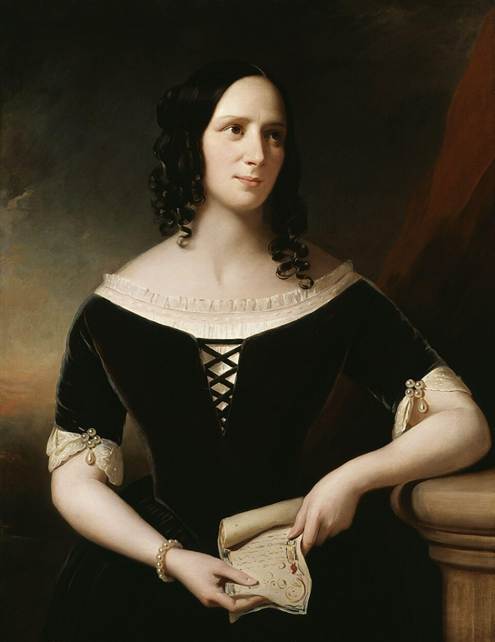
Strickland, a historian, novelist, and poet, wrote the short story titled Candava; or, the Last Suttee, originally serialised in Home Circle in 1849, which is presented here in a new edition. It has been transcribed according to semi-diplomatic principles: original spelling, punctuation, capitalisation, paragraphing, punctuation, and typographical errors have been retained.
Historians of empire and print culture will find much to consider in this short tale. That Strickland’s novel contains Orientalist stereotypes will surprise no one. She was certainly on the side of Macauley and Bentinck. The melodrama, for such it is, works to a crescendo in which soldiers of the Company ride to the rescue of a swooning Indian princess. Yet, though short, Strickland’s novel challenges the simplistic binary of Empire—Bad: Native—Good. For all its imperial triumphalism, the tale’s moral force ultimately depends upon a fact that such binaries struggle to accommodate: Candava is not a willing victim of empire but a woman being violently coerced to her death, and British intervention saves her life.
Conclusion
Even though India received its independence from Britain in the 1940s, the Indian Government passed another Act of Parliament in 1988 which confirmed the ban on sati. This decision stemmed in part from a recent case which occurred in 1987 in Rajasthan when an 18-year-old girl mounted her husband’s funeral pyre, much to the condemnation of the international community. The Commission of Sati Prevention Act deemed that
If any person commits sati, whoever abets the commission of such sati, either directly or indirectly, shall be punishable with death or imprisonment for life and shall also be liable to fine.
In spite of this, there has been a case as recently as 2006, when 40 year old Janakrani, burnt to death on the funeral pyre of her husband Prem Narayan in Sagar.[6] Evidently the practice persists in some of the more rural parts of India.

Agnes Strickland’s Candava; or, The Last Suttee (1849)
[Part One]

Saturday, July 7, 1849 [pp. 1–3]
CANDAVA;
OR,
THE LAST SUTTEE.
BY MISS AGNES STRICKLAND,
Authoress of the “Lives of the Queens of England.”
It was at the hour of freshness, immediately preceding sunrise, that Ellen Mortlake, the widow of an English officer, who was returning to Calcutta by way of the Ganges, in the dâk, or passage-boat, brought her little son, a pale, delicate invalid of seven years’ old, on the deck, that he might enjoy the coolness of the light breeze that slightly agitated the broad bosom of the mighty water over which they were rapidly gliding. Algernon was the only child of the young widow. He was a boy of precocious intellect and singular beauty, but latterly he had begun to droop, from the fatal influence of the climate, and an immediate removal to England was considered expedient for his restoration to health. The swift passage of the vessel appeared dilatory to the anxious mother, so eager was she to arrive at Calcutta, whence she expected to sail immediately for England. Her feelings may therefore be imagined, when the dâk, in doubling a promontory, grounded on a sand-bank, and received such damage as rendered it necessary for the passengers to go ashore while the injury was repaired.
They landed beneath the dark shadow of one of those desolated Hindoo palaces, whose stupendous ruins are frequently to be seen on the banks of the Ganges. The young English widow, leading her son by the hand, strolled anxiously among its spacious courts and deserted halls. Fountains that had ceased to play, and broken altars, met her sight in every direction, and not unfrequently was her timid child startled at the terrific appearance of the grim idols of Hindostan, especially at that of Cali the Destroyer, who, crowned with her chaplet of skulls, was placed beneath a sombre-arched recess, from whence she extended her fourfold arms, as if in quest of victims. Instinctively the mother drew her boy closer to her side, and fell into a reverie, from which she was roused by the soft pressure of the hand of her little boy, who, pointing to the hideous idols, asked—
“Mamma, are not these the graven images, which God has commanded us not to worship?”
She replied in the affirmative.
“I do not like to see them, or be where they are, mamma,” said the child; “take me away.” But his mother was bewildered in the maze of courts and colonnades into which she had imprudently ventured without guide or clue by which to retrace her steps, and, after wandering still farther from the place by which she had entered, she found herself beneath an ancient gateway leading to a garden, on which, evidently, very recent cultivation had been bestowed.
In the midst of this lovely spot, surrounded by lofty peepul trees, the dark-leaved betel, and the rich roses of the East, appeared a miniature pagoda, of the most elegant modern architecture; and Ellen, who was conversant in Oriental customs and languages, soon discovered that it was dedicated to the memory of a Hindoo widow of high caste, who had fallen a sacrifice to the hideous superstition of Suttee.
The oblation of fruit and flowers displayed in the pagoda denoted plainly that the poor victim had earned the envied distinction of an idolatrous homage. From the contemplation of a subject so painful to a Christian, Ellen was roused by the soft pattering of female steps; and, feeling that her presence might be deemed intrusive, she retired with her little boy behind the projection of a broken column, whence she perceived a procession of veiled females, each carrying a vessel of copper on her head, issuing from the interior of the desolated palace. Every one in this mysterious little train was clothed in flowing draperies of snowy muslin, and their flexible figures moved with inimitable grace, as they glided down a long vista of grey ruins, and were lost to her view. She supposed they belonged to some Prince’s zenana, enclosed within these decaying walls, and were proceeding to perform the rite of drawing water from the sacred stream at sunrise. Her surmise was in some measure confirmed by the return of the procession, each female bearing her vessel of water.
The superior rank of the lady who walked at the head of this company, was denoted not less by the dignity of her mien, than by the richness of the gold-flowered muslin of Dacca, of which her dress was composed, the gems that adorned her massive gold anklets, and the jewelled crescent that sparkled amidst her ebon tresses; and had any doubt on that point existed, it would have been removed, when, on withdrawing the veil that had hitherto concealed her features, the alternate stripes of gold, vermillion, and white, by which the beauty of her finely-moulded brow was marred, afforded sufficient indications of the high caste to which Candava belonged. She was, in fact, the daughter of the Rajah Ragoba Châha-mâna, one of the last descendants of the Hindoo sovereigns of Delhi, one of those native Princes, who, tenaciously clinging to the empty distinction of hereditary royalty, showed their limited means by keeping within the bounds of their ruined palaces, where they drag out a forlorn existence in solitary state, aping the vain formality of regal etiquette.
Ellen Mortlake, who had never before beheld an Hindoo lady of the royal caste, examined the features of Candava with intense interest; they were expressive and beautiful; her complexion, of the pale olive tint, [p. 2] was not darker than that of a female of southern Europe, and her eyes were large, black, and languishing. Instead of returning into the recesses of the palace, she paused before the new little pagoda; as she gazed on it, the tears began to steal from beneath her long jetty eyelashes, and, hastily motioning to her attendants to withdraw, she entered it, and bowing her face on its marble pavement, she lifted up her voice, and wept, exclaiming, from time to time, in the piercing accents of sorrow, “Oh, Radama! Oh, my sister!”
To intrude upon affliction to which she could offer no consolation, Ellen felt would be improper. She was about to withdraw from the spot, when her little Algernon silently directed her attention to some glittering object among the grass, at no great distance from the pagoda. Ellen softly advanced and took it up. She instantly perceived that it was a costly bracelet of pure gold, enriched with gems, which had in all probability been dropped by the beautiful Hindoo Princess before her.
When the latter descended the steps of the pagoda, Ellen Mortlake approached her, and presenting the bracelet, asked her in Hindostanee, which she spoke with fluency, “If it did not belong to her?”
Candava appeared somewhat startled, if not alarmed at the sight of a stranger, and instinctively drawing back, as if fearful of personal collision, she rejected the precious ornament with a look of aversion, exclaiming, “It was mine, but it is now polluted!”
Ellen explained to her, that, being aware of the national prejudice which forbids the high castes in India to touch any article which has been handled by persons beyond the pale of their own privileged order, she had raised the bracelet with a corner of her shawl, on which she still held it.
Candava acknowledged this courtesy with a low inclination of her head, but declined receiving the bracelet again.
Ellen would have laid it on the grass at her feet; but Candava, with the magnificent spirit of Oriental generosity more in keeping with the regal splendour of her forefathers than with the present fortunes of her family, bade her “wear it as a memorial of the daughter of the Rajah Ragoba Châha-mâna.”
Ellen pointed to her sable dress, and informed the Indian Princess that “glittering ornaments were inconsistent with the garb of widowhood which she then wore.”
Candava, without touching the dress, scrutinised it with childish curiosity, shook her head, and expressed great disapprobation of its form and sombre hue; then asked Ellen if it were not very repugnant to her feelings to wear such a garb, which she concluded was the livery of disgrace appointed for European widows who refused to be burned with the bodies of their deceased husbands.
“We have no such custom in Europe,” replied Ellen; “for we are Christians, and regard Suttee as murder, highly offensive in the sight of God.”
The beautiful Hindoo was for a moment mute with astonishment at these words.
“The gracious and beneficent God whom I serve,” continued Ellen, in reply to a quotation from the Shaster, which Candava repeated in support of this practice among her countrywomen, “has laid no such heavy burdens on His creation as your creed enforces. The mistaken daughters of Brahma immolate themselves on the funeral piles of their dead husbands, in blind compliance with the dictates of the murderous priests of the powers of darkness, or in a yet more sinful compliance with the suggestions of their own self-deluding vanity, which prompts them to a sacrifice from which human nature shrinks back in horror.”
The subject was evidently one of painful interest to the young Hindoo. Her lips quivered, and she listened with trembling intensity, while the tears gathered in her dark dilated eyes, and at length fell in heavy drops; and though she endeavoured to conceal her emotion by hastily enveloping her face in her veil, her agitation was perceptible from the convulsive heaving of her bosom beneath its folds. At length she said, “Why should you seek to dispel the bright hopes which sustain the daughters of Brahma in the fiery test through which they must pass ere they can enter the abodes of everlasting joy?”
“But it is not every daughter of Brahma, who survives her husband, that can be prevailed upon to inflict upon herself a death of torture,” said Ellen.
“Woe! woe! to those who refuse,” replied Candava. “A darker, a more dreadful destiny awaits them, than the devouring flame which consumes their living bodies.”
“To what punishment, then, are they condemned?” demanded Ellen.
“They are condemned to no punishment; but they become outcasts, and are exposed to infamy and contempt, and to a thousand sufferings, harder far to endure than the fires of Suttee,” replied Candava.
“At the peril of such alternative, the sacrifice of the unhappy widow ceases to be voluntary,” observed Ellen; “and therefore it is impossible that it should purchase for her those glorious distinctions which are deludingly promised to her by the false priests, who are neither more nor less than her murderers.”
“Hush!” said Candava, looking fearfully around her; “you must not utter words like these; it is at the peril of both your life and mine.”
“That truth is spoken and heard in these dark regions of falsehood and superstition!” rejoined Ellen, indignantly.
Here Candava fled from her, as if affrighted, and entering the ruinous palace, was presently lost in the obscurity of its shadowy recesses. To pursue her steps would have been useless, even had time and opportunity suited, and Ellen, deeply regretting the unexpected termination of a conversation, which she had hoped would have led to better results, sorrowfully proceeded to retrace her path to the spot where the dâk was moored; but again she was bewildered in the labyrinth of desolate halls and courts, overgrown with jungle, where she dreaded every moment to rouse the slumbering scorpion, or to encounter the fierce eyes of the cobra di capello.
The sun had now fully arisen, and the heat became oppressive, even in the sombre shades of the marble wilderness she traversed; and Algernon, who had long hung heavily upon her, at length stopped short, and declared his inability to proceed a step further.
“But, Algernon, the passage-boat will sail without us, unless we hasten to the river shore,” said the anxious mother, becoming sensible, too late, of her imprudence in having strayed from her fellow-passengers.
“Mamma, I can walk no farther,” replied the child, in a faint voice.
“Then I must carry you, my Algernon.”
“No, no, mamma; you are not strong enough for that. Sit down by me on the grass, that I may rest my head upon your lap, for it aches sadly, mamma, and I want to go to sleep.”
With anguish which no words can speak, the widowed mother contemplated the pallid cheek and sunken features of her child, and while she felt it impossible to leave him, even for a moment, to procure assistance from the companions of her voyage, she was aware that, unless she could find some means of conveying him to the dâk, it would, in all probability, [p. 3] proceed without her. It was to no purpose that she called loudly on the names of those most familiar to her. The echoes of her own voice alone met her ear in reply, as she sat amidst the loneliness of desolation, clasping her sick child to her throbbing bosom, while her fast flowing tears fell on his burning brow.
“Look there, mamma, she is here,” whispered Algernon, and Ellen, raising her streaming eyes, beheld the graceful figure of the Rajah’s daughter leaning over the gilded balustrade of a high gallery, that surrounded the court in which they were seated.
Her veil was thrown back, and were it not that its snowy folds and the long tresses of her glossy ebon hair were at times agitated by the breeze, Ellen would have mistaken her for a statue, so fixed and motionless was her attitude, as she silently watched their proceedings from her lofty station.
Ellen, pointing to her child, implored her assistance with mute but eloquent gestures of entreaty. Candava immediately disappeared behind the silken curtains that screened the interior of the zenana, leaving it doubtful whether she would extend her compassion to the friendless pair. In the course, however, of a few minutes, she was at Ellen’s side, of whom she enquired her cause of distress, and in what manner she could assist her.
Ellen explained the situation of her child, and her apprehension lest the dâk should proceed without her.
“If thou wilt ascend with me the steps of yonder lofty terrace, which looketh on the sacred stream of Ganges,” replied Candava, “thou wilt see the last fluttering of the white sails which brought thee hither.”
“You do not mean to say that the boat is already gone?” exclaimed Ellen, in great alarm.
Candava assured her that she had seen it rapidly gliding down the mighty river; and Ellen, on ascending the terrace to ascertain the fact, beheld the boat in the distance, fast receding from her anxious sight. Slowly and sadly she retraced her steps to the spot where she had left her child, whom she clasped to her bosom in a paroxysm of maternal love and grief, exclaiming, “Woe is me, my child, that I should have brought thee hither to perish!”
Her feelings were perfectly intelligible to Candava, though she spoke in a strange tongue, and she endeavoured to console the distressed mother with the assurance, that in the course of a few days another boat would pass beneath the shadow of her father’s palace.
“But, in the mean time, what will become of us?” said Ellen, despondingly.
“I will give you shelter and succour,” replied Candava.
“But will it not be at the price of peril to yourself?” asked Ellen.
“I am as the light to the eyes of the Rajah, my father,” replied Candava; “why then should I fear his anger for that which is good?” She clapped her hands and a slave appeared, whom she directed to take the sick child in her arms and carry him into the zenana, to which she conducted Ellen by a winding stair, which led from a gate in the court into the interior of the building.
There was much to gratify the attention of the curious in the exquisite carving of flowers, fruit and birds, in jasper, lapis-lazuli, and cornelian, with which the walls of these generally-inaccessible apartments were adorned. In these, far from there being any traces of the decay and desolation so evident in all other parts of the building, every species of eastern luxury prevailed that could conduce to the comforts and enjoyment of the Rajah’s daughter, who directed the slave to place the child on a pile of embroidered cushions, and another to fan him, while a third presented fruit, and a fourth sherbet, to him and his mother. The relief afforded to Algernon by these comforts was only temporary; his languor increased, and after a few hours he grew visibly worse. The tender-hearted Candava, who, though she scrupulously avoided touching him, shared his mother’s vigils, and hung over the fair-haired boy with the same passionate interest she would have evinced in a favourite bird or gazelle when sick, wept and abandoned herself to the most uncontrollable grief, when a darker, deadlier shade marbled his brow and dimmed his soft blue eyes.
“He will die!” she shrieked; “and the dust will be spread over his fair face and his smiling lips; and his golden ringlets will be hidden in the darkness of the grave.”
“Yes, he will die!” repeated the Christian mother, who was kneeling by the side of her last earthly treasure, holding his livid and convulsed hands in her trembling grasp—“He will die,” she said, raising her tearful eyes to Heaven with that expression of deep but subdued sorrow, which was far more touching in its mournful and silent acquiescence in the will of her Almighty Creator, than the most agonising bursts of grief—“The grave will receive my beloved one, and the beauty of his mortal nature will wither in its kindred dust; but his spirit, clothed with brighter charms, is called to rejoice, for ever, in the presence of his Father and his God.”
“Mamma,” said Algernon, in a dying voice, “I grieve to leave you, but my Saviour, who died for my redemption, calls me away, and He will comfort you when I am gone.”
“Yes, my precious child, His will be done! it is His mercy which strengthens me in this hour of affliction, which, while it was yet far off, appeared to me too dreadful to be borne, but now it hath come, the everlasting arms of His love support me, and in His spirit I see the light shining amidst the darkness of my mortal nature, which prompts me to rebel against that which His wisdom sees fit for me.”
The little hands that had hitherto from time to time returned the mother’s fond pressure, became cold and passive in her trembling grasp; and the eye that had beamed love upon her long after the powers of utterance had failed, grew fixed and rayless, and the gentle spirit passed away without a sigh or struggle.
Candava and her attendants raised wild cries as soon as they became aware of the fact that the child had ceased to exist, and gave utterance to lamentations of the most passionate nature; which afforded a singular contrast to the mournful but sublime resignation of the pale and silent mother, who, with a trembling hand, closed the cold eyelids of her beloved child in their long sleep, in the joyful assurance that when they again unclosed, it would be to behold the glorious morning of that day which should be darkened by no shadow or sunset.
That evening the mortal remains of her faded bud of earthly promise were consigned to the silent keeping of the grave, dug beneath the shade of the amra tree in Candava’s little garden; the white blossoms as they fell in soft showers on the little mound that covered him, appeared like emblems of the fragility and ephemeral existence of the flower that withered in dust below.
(To be continued in our next.)
[Part Two]
Saturday, July 14, 1849 [pp. 17–18]
CANDAVA;
OR,
THE LAST SUTTEE.
BY MISS AGNES STRICKLAND,
Authoress of the “Lives of the Queens of England.”
(Concluded from page 3.)
Candava and her maidens felt their superstitious faith in the gross and monstrous fables of Indian mythology fading by degrees before the divine influence of the truths of revelation, resistless in their sublime simplicity. Ellen, one evening, while engaged in holy meditation by the grave of her son, was interrupted by the hasty approach of Candava, with dishevelled hair, and rent garments, who, forgetful of the hitherto unconquerable prejudice of her high caste, flung herself into her arms, exclaiming, “Woe! woe! my sister, weep for me! I am as one sold to the destroyer! yea, I am already wedded to the fires of the Suttee, like my unhappy sister, Radama!”
She then explained that the Rajah, her father, who had been absent for the last few days, had just returned with an old Hindoo prince, his friend, to whom she was to be given in marriage that night. Ellen urged her to avert a sacrifice so terrible, by renouncing the idol worship of her people, and declaring herself a Christian.
“Shall I not lose caste, and become a miserable, degraded Pariah?” exclaimed Candava, shuddering, and endeavouring to tear herself from the arms of her English friend. “Away! they must not know that I have touched you;” continued she, breaking from Ellen’s hold. “You know not my peril, or the snares that beset me.”
“Candava, they are the snares of the Power of Evil, whom I charge you to resist. His seal is upon you, even the boasted mark of your high caste—that fatal distinction, which the waters of baptism ought long since to have washed from the brow of a Christian convert.”
Candava impulsively dipped her hand into the waters of the fountain, near which they were standing, with the intention of obliterating the envied token of her royal lineage from her forehead; but the struggle of pride and superstition within her soul was too mighty for her imperfect faith to overcome. She paused, and faltered; and at that moment her name was loudly vociferated from the balcony of the piazza. “It is my father’s voice!” she cried; and fled, leaving Ellen alone.
At sunset, the clamorous dissonance of drums, gongs, and other barbaric instruments, announced the bridal festivities of the Rajah’s daughter had commenced, and were celebrating, with all the idolatrous rites of Hindostan. The childless widow grew pale, and cold as marble, as she sat, in the desolation of her soul, by the grave of her boy, listening to the shouts, the wild laughter, and wilder songs, whose unhallowed sounds profaned the quiet of that dear spot, where her last earthly treasure rested. How willingly would the bereaved mother have laid her head there also, if it had been permitted her to rest beside him. It was not till that moment that Ellen felt the desolation of her lot in its full force; but now she felt herself a friendless stranger in a heathen land. The zenana of the Rajah would afford her a shelter no longer, and whither could she go.
Candava and her slaves, in compliance with the customs of the East, would, she knew, be conveyed to the zenana of the bridegroom. There were, however, two of these females more courageous than their timorous princess; they came to tell Ellen that they had received their freedom, and permission from the bride to accompany her to Calcutta. A budgerow, bound thither, was even then moored beneath the walls of the palace, and a present which Candava had sent her as a farewell token of her love, would furnish her with ample means for their voyage.
A few steps brought them to the spot. Ellen obtained places in the cabin for herself and her humble proselytes, whom she embraced, and promised to be their friend and protector. It was indeed a consolation to her sad heart, that her sojourn in the strong-hold of idolatry had not been without some good result.
At Calcutta, where she had been mourned by the companions of her former voyage, as one whom they should see no more, the return of Ellen Mortlake excited the greatest interest. She found there her eldest brother, who had just arrived from England, having obtained a chaplaincy in the Company’s service. Ellen’s knowledge of the language and habits of the Hindoos were calculated to render her useful in the superintendence of the schools for adult females which Henry Moore was about to establish, and she determined to remain with him, to assist in his arduous labours in that widely-extended field. After the lapse of three or four years, he was appointed to a situation in the interior, and there also Ellen determined to accompany him. In the course of their journey, when approaching one of the most popular cities in Hindostan, the brother and sister found their progress impeded by the active preparations that were making for the abhorrent rite of Suttee. The pile destined to consume the living widow with the ghastly remains of her dead husband was erected on the banks of the Ganges, and thousands of spectators had already assembled, with barbarous satisfaction, to feast their eyes on the cruel pageant.
Ellen Mortlake, pale and sick with horror, clung to her brother’s arm for support, as she gasped out, “Is there no means of preventing this frightful tragedy?”
“It can be prevented, and it shall,” he replied; “Lord William Bentinck has abolished Suttee. Ellen, [p. 18] dare you remain with the bearers, while I hasten to the British head-quarters to obtain assistance?”
“Go—go, my brother,” she replied. “I have no other fears than that you may be too late.”
Lingering as the interval appeared after Henry Moore’s departure, the moments only fled too rapidly away, for, scarcely had the southern constellations began to reflect their pale lustre in the broad mirror of the Ganges, when the fiend-like uproar commenced, the discordant clangor of barbaric instruments, the yells, the shouts of the unfeeling multitude, announced the approach of the murderous procession. Ellen had been placed by her brother on a spot which commanded a view of the dreadful scene. With an interest too painful for tears, she awaited the appearance of the hapless victim of this unhallowed superstition, who, richly adorned, walked unveiled between the two principal actors in the work of horror. She was too evidently a reluctant sacrifice, for her trembling form was rather dragged than led by her cruel supporters towards the fatal pile.
The awful paleness of mortal terror, the agony of her despair, moved, but could not destroy the beauty of the young and lovely victim. Ellen uttered an irrepressible cry of anguish, for in that wan and woeful countenance she recognised the unforgotten features of Candava.
“Oh, my brother, the rescue will be too late!” exclaimed Ellen, wringing her hands, as the pitiless Brahmins placed the living, breathing form, whom they had destined to the devouring flames, by the side of the livid corpse that was exalted on the pile, while the frantic shrieks of the poor victim were heard above the clamour of the barbaric instruments and the howling of the heathen zealots. Candava’s struggles and desperate resistance caused an unexpected delay. She had burst from their cruel bonds just as they were attempting to confine her in a recumbent posture, by binding a strong bamboo across her trembling form. She sprang to her feet, and stood erect, spreading her arms abroad for aid, but was instantly overpowered, and bound to her dead husband’s side. Scarcely was this accomplished ere the sound of military music was heard above the yells of the heathen rabble. There was a pause—a sort of panic—among the Brahmins, for they knew they were engaged in an illegal rite, and yet appeared obstinately bent on carrying it through. A detachment of British cavalry now dashed through the crowd, with drawn sabres, and Henry Moore, who had outstripped them all in his energetic efforts to prevent the consummation of the sacrifice, darted forward, and struck the torch out of the hand of the obdurate Brahmin, who was in the very act of igniting the fatal combustibles. Then the young officer by whom the brigade was commanded leapt from his horse, sprang upon the pile, and with one stroke of his sabre severed the unhallowed bonds which united the living and the dead, and, raising the fainting Candava in his arms, carried her off triumphantly, amidst the shouts of his countrymen and the yells of the disappointed natives, who assailed the gallant soldier with missives in all directions.
“Hold!” he exclaimed, with equal courage and temper; “your resistance is illegal. The British Government has at length abolished Suttee for ever, and it will be at the peril of life and property if that abomination is ever again attempted in British India.”
When Candava revived from her long and death-like swoon, she found herself in the arms of her friend, Ellen Mortlake, and sinking on her knees, she returned fervent thanks to Heaven for her deliverance; and the marks of royal caste were washed from the brow of the Rajah’s daughter, in the waters of the baptismal rite, by which she was admitted a member of the Christian Church.
References
[1] Robert Southey, ‘Harold; or, The Castle of Morford’. Oxford, Bodleian Library, Bodleian MS Eng. Misc. e. 21 (Summary Catalogue 71777), ff.119v-120r.
[2] This introduction adapts and expands previous work: Stephen Basdeo, ‘The Crime of Sati’, Reynolds’s News and Miscellany, 17 April 2019, https://reynolds-news.com/2019/04/17/the-crime-of-sati-stephen-basdeo/
[3] Phebe Gibbs, Hartly House, Calcutta, ed. by Michael Franklin (Manchester: Manchester University Press, 2019), pp. 102–3.
[4] Thomas Babington Macaulay, “Speech in Parliament on the Government of India Bill, 10 July 1833,” Macaulay, Prose and Poetry, selected by G.M. Young (Cambridge, MA: Harvard University Press, 1957), pp. 716-18
[5] “Sati: Official Documents, Lord William Cavendish Bentinck,” in World History Commons, https://worldhistorycommons.org/sati-official-documents-lord-william-cavendish-bentinck [accessed August 11, 2026]
[6] Anon., ‘India wife dies on husband’s pyre’, BBC News, 22 August 2006, online edn <http://news.bbc.co.uk/1/hi/world/south_asia/5273336.stm> [Accessed 17 April 2019].
Categories: British Empire, British India, East India Company, Heroes of the British Empire, India, novels, Sati